
Geometry Arrow

Drive a soccer ball through an exciting infinite...

Guide a speeding ball through futuristic space t...

Roll at top speed on steep neon slopes, dodge de...

Hit notes on beat, win rap battles, and complete...

Control a slope ball at maximum speed down dizzy...

Run a busy supermarket as a monkey, stock shelve...

A casual driving physics-based racing game that ...

Move the 3D ball from the start to the endpoint ...

Slither, merge, and dominate! Control a number-p...

Guide your ball through multiple platforms in th...

Race through a spinning neon tunnel, dodge obsta...

Geometry Dash SubZero is a high-speed rhythm-bas...

Control a tiny rocket through space, match color...

Geometry Dash is a free side-scrolling platforme...

Keep the ball on the path for as long as you can...

Guide a ball through challenging platform obstac...

An exhilarating casual sports game where you gui...

Dash through New York themed subway tracks, dodg...

Slope 3D is a fast-paced, endless racing game wh...

Race your country's marble against others in a t...
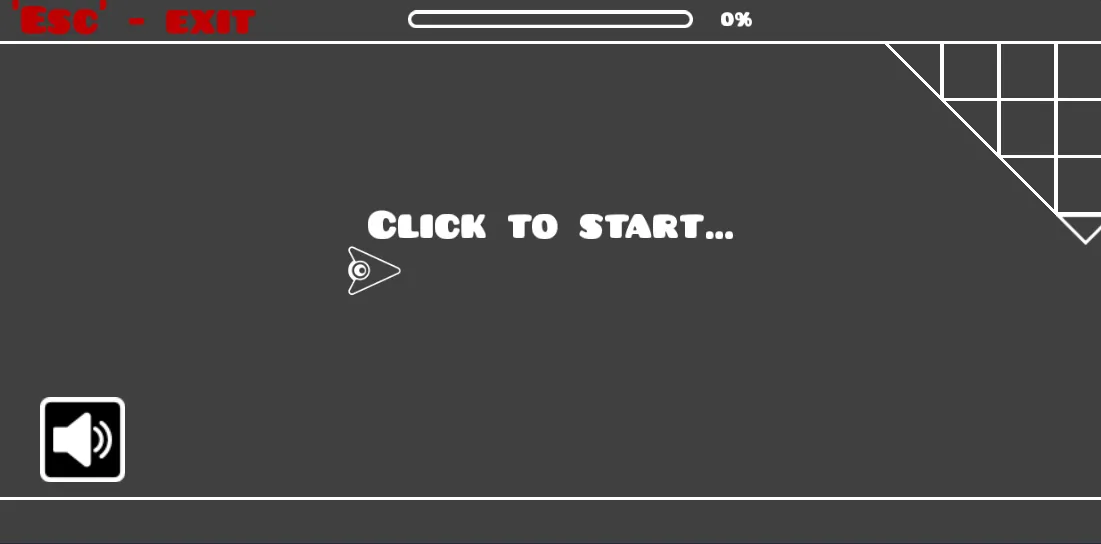
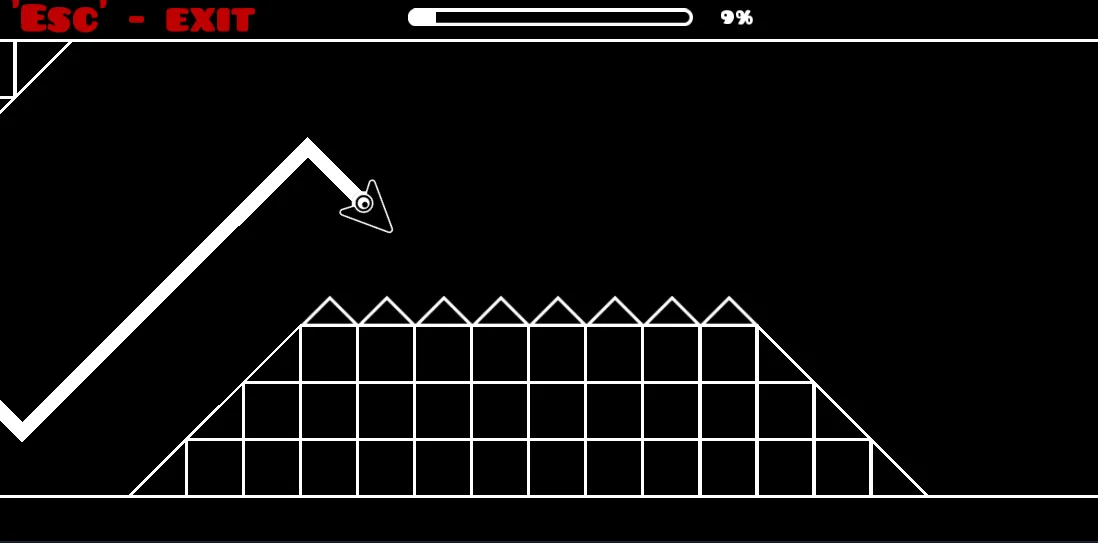
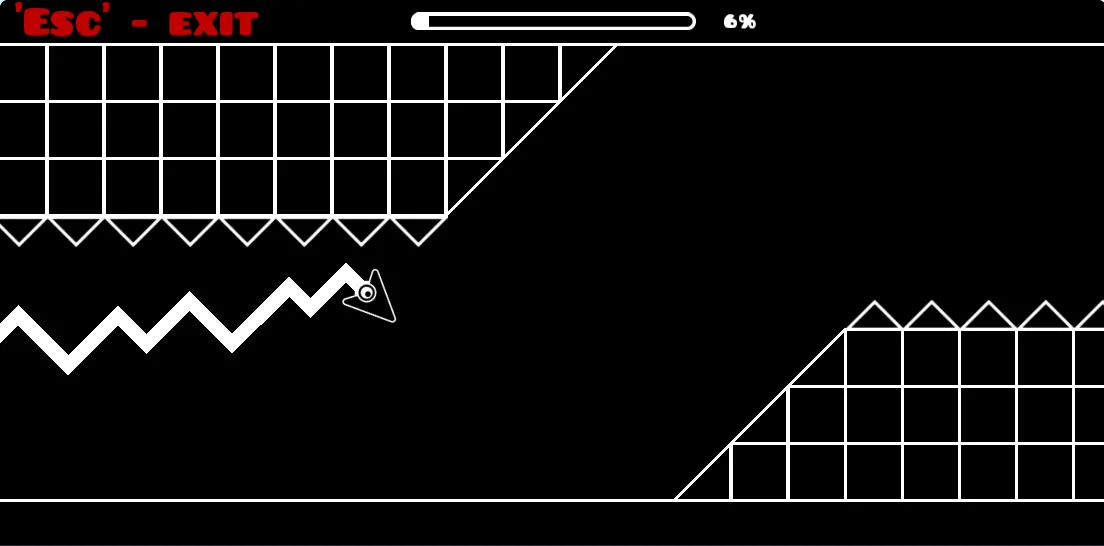
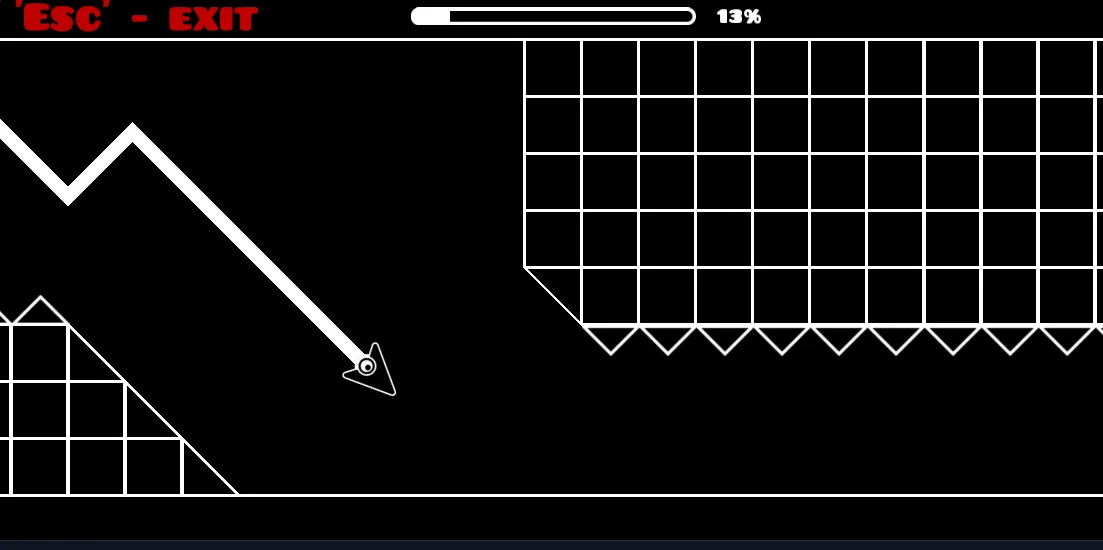
Geometry Arrow is a unique platformer game that takes inspiration from the popular Geometry Dash series' wave mode. Based on the groundbreaking wave game mode created by Swedish developer Robert Topala in 2013, this game offers its own original experience. Players control a triangular arrow that moves in a zigzag pattern through obstacle courses. The arrow constantly moves forward, requiring quick judgment and precise timing. With 6 distinct levels offering different challenges, the game features a well-balanced difficulty curve that appeals to both beginners and advanced players.
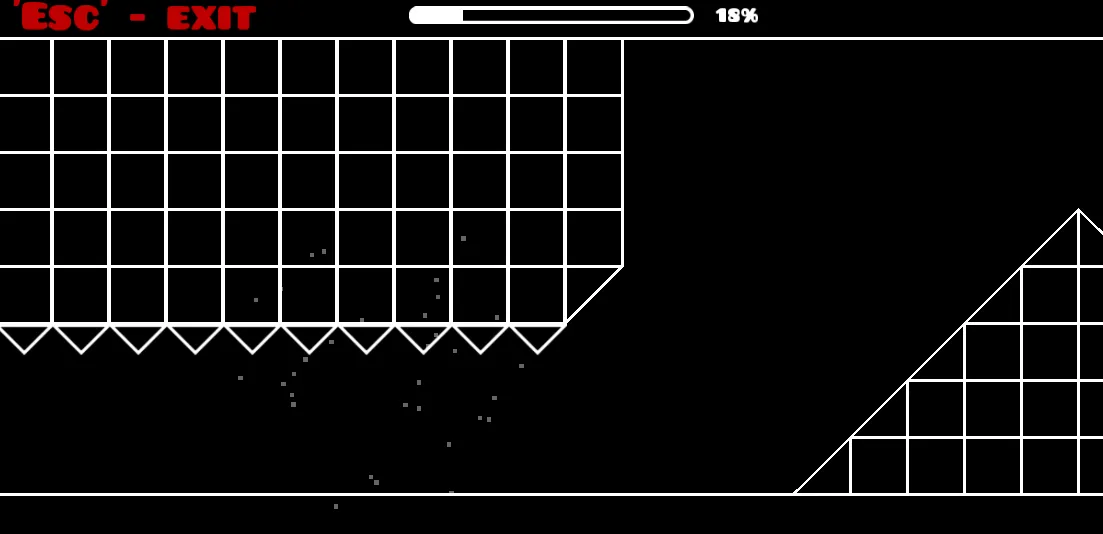
Geometry Arrow optimizes the wave mode as its core gameplay mechanic. Players control a triangular arrow icon that navigates through obstacle courses in a zigzag pattern. Since the arrow always moves forward, quick reflexes and accurate timing are essential. Click the left mouse button to move the arrow up, and release to move it down. Gravity affects the wave's motion, creating a distinctive zigzag pattern. The arrow can pass through space, ground, and ceiling without obstacles, but touching any obstacle results in game over. Each level progressively increases in difficulty, testing players' reflexes with complex obstacle arrangements including spikes, moving platforms, and narrow passages.
During recent playtest sessions on Geometry Arrow, we focused on repeatability, not one lucky clear. The first goal was to establish a stable opening route that reduces random input spikes. In early attempts, the main failure pattern was over-correcting after near misses. Once we switched to smaller corrections and pre-read obstacle timing one pattern earlier, clear consistency improved significantly. This is especially important in geometry games where speed rises faster than player confidence.
Our route planning is divided into three windows: setup phase, pressure phase, and conversion phase. In setup, we prioritize safe positioning over score greed. In pressure, we accept that one controlled loss is better than panic movement that ruins the whole run. In conversion, we preserve rhythm and avoid unnecessary risk. This framework works well for Geometry Arrow because the game rewards composure and pattern memory more than raw reaction bursts.
We also tested mobile and desktop controls separately. Desktop usually delivers cleaner micro-adjustments, while mobile can still perform well if you shorten session length and avoid fatigue drift. The most common mobile mistake is late correction after visual overload; the fix is to anchor your eye line slightly ahead of your avatar and trust your rhythm rather than reacting to the current obstacle too late. For players switching devices, keep route logic identical and only adapt input sensitivity.
For difficult sections, we recommend segment-first practice: run the same risk cluster repeatedly until your success rate is above 70 percent before trying full clears. Players who practice entire runs too early often plateau because they collect too little high-quality repetition on the true choke points. In Geometry Arrow, the key choke points are usually transition edges where pacing changes suddenly. If you fail there repeatedly, reduce speed expectations and rebuild timing windows from a calmer baseline.
Failure analysis showed five recurring causes: greedy line selection, delayed release timing, panic correction after collision scares, poor camera focus discipline, and session fatigue. Every cause has a direct mitigation: choose safer lanes when score is unstable, commit to release timing cues, reset posture after near misses, keep a fixed visual scan lane, and cap intense sessions at manageable intervals. These are simple habits, but they produce measurable consistency gains.
Finally, the most practical way to improve in Geometry Arrow is to track process metrics instead of only final score. Log your best clean segment, your most frequent death pattern, and your average recovery quality after mistakes. Over one week of focused practice, these metrics usually improve before leaderboard score does. When they do, score follows naturally. This is the same method we use for all core game pages on GeometryArrow.info and it is the reason our route suggestions prioritize reliability over flashy but unstable plays.
Practical execution checklist for Geometry Arrow: before each attempt, define one specific objective such as cleaner transition timing, fewer panic corrections, or safer lane discipline. During the run, evaluate only the chosen objective and avoid mentally scoring every small mistake, because overloaded self-feedback creates delayed reactions. After each attempt, write a one-line review with the exact failure trigger and immediate fix. This micro-loop improves learning speed more than repeating long unfocused runs. For consistency training, use a three-cycle block: two conservative attempts focused on accuracy, then one optimization attempt focused on efficiency. If optimization breaks consistency, return to conservative rhythm and rebuild. Players who follow this pattern for a week usually improve both completion rate and score stability. In our test sessions, this method reduced repeat deaths in transition zones and improved control quality under fatigue. Also apply a stop rule: after three frustration runs, take a short reset break to prevent reinforcing bad timing habits. The objective is sustainable improvement, not maximum retries in a single session.


Geometry Arrow features 6 levels, each offering different difficulty and challenges:
• Level 1 (Easy): Introduction level that teaches the game's basic elements • Level 2 (Normal): Adds long spike courses and floating obstacles • Level 3 (Hard): Features giant wall blocks and spikes, with increased arrow speed • Level 4 (Harder): Fast and difficult turning point level • Level 5 (Insane): Long and dark track with unexpected obstacles • Level 6 (Demon): Ultimate challenge with unpredictable obstacles and peak speed
Q: How do I improve quickly in this game?
A: Practice the hardest segment separately, then reconnect segments into full runs once your segment clear rate is stable.
Q: Why do I keep failing after good starts?
A: Most players fail from over-correction after near misses. Use smaller recovery inputs and keep a fixed visual scan lane.
Q: Is mobile harder than desktop?
A: Usually yes for precision inputs, but mobile performance becomes stable when sessions are shorter and rhythm-based inputs are used.
Q: Should I chase score lines every run?
A: Only after consistency is established. Reliability first, optimization second.