Rocket Soccer Derby

Rocket Soccer Derby

Rocket Soccer Derby icon

Rocket Soccer Derby

sport
4.2/ 5
Drive rocket-powered cars, hit giant balls, and outscore opponents in chaotic arena soccer matches.
  • Exciting mix of cars and soccer
  • Strong competitive match pacing
  • Rewarding physics-based ball control
new

Game Details

Game Introduction

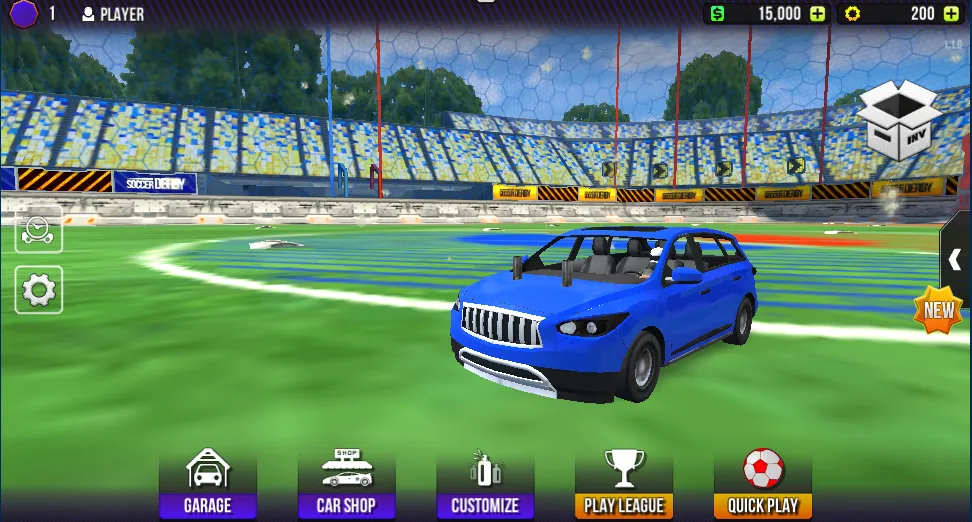
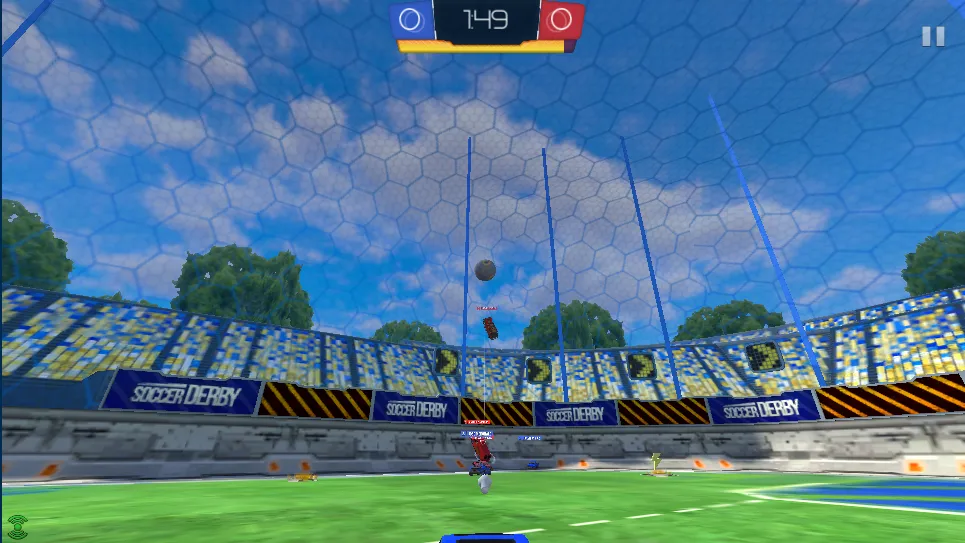
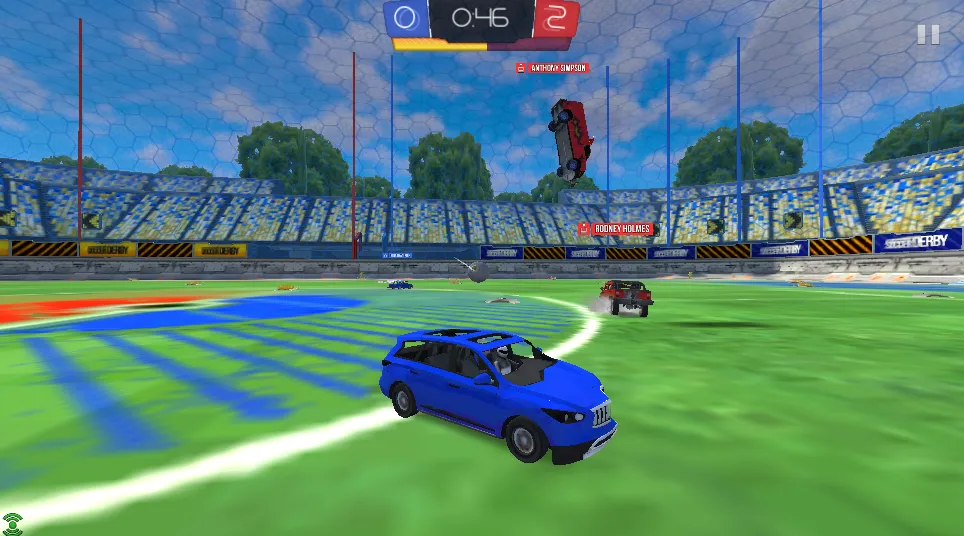
Rocket Soccer Derby combines arcade driving and soccer into explosive arena competition. You control a boost-powered car, chase the oversized ball, and battle for positional advantage while aiming for clean shots on goal.

Matches are won through more than raw speed. Good players control rotations, challenge timing, and defensive recovery, turning chaotic moments into coordinated offense and quick counterattacks.

The game is accessible for newcomers but leaves room for mastery through dribbling touches, wall rebounds, and boost management. Each match feels dynamic because ball physics and player interactions constantly reshape the flow.

How to Play

Accelerate, steer, and boost your car to strike the ball and create scoring chances. Balance aggression with defensive positioning to avoid conceding easy goals.

High-impact gameplay rewards prediction and spacing. Reading rebounds early and rotating back after missed plays is crucial for consistent wins.

Original Playtest Review

During recent playtest sessions on Rocket Soccer Derby, we focused on repeatability, not one lucky clear. The first goal was to establish a stable opening route that reduces random input spikes. In early attempts, the main failure pattern was over-correcting after near misses. Once we switched to smaller corrections and pre-read obstacle timing one pattern earlier, clear consistency improved significantly. This is especially important in sport games where speed rises faster than player confidence.

Our route planning is divided into three windows: setup phase, pressure phase, and conversion phase. In setup, we prioritize safe positioning over score greed. In pressure, we accept that one controlled loss is better than panic movement that ruins the whole run. In conversion, we preserve rhythm and avoid unnecessary risk. This framework works well for Rocket Soccer Derby because the game rewards composure and pattern memory more than raw reaction bursts.

We also tested mobile and desktop controls separately. Desktop usually delivers cleaner micro-adjustments, while mobile can still perform well if you shorten session length and avoid fatigue drift. The most common mobile mistake is late correction after visual overload; the fix is to anchor your eye line slightly ahead of your avatar and trust your rhythm rather than reacting to the current obstacle too late. For players switching devices, keep route logic identical and only adapt input sensitivity.

For difficult sections, we recommend segment-first practice: run the same risk cluster repeatedly until your success rate is above 70 percent before trying full clears. Players who practice entire runs too early often plateau because they collect too little high-quality repetition on the true choke points. In Rocket Soccer Derby, the key choke points are usually transition edges where pacing changes suddenly. If you fail there repeatedly, reduce speed expectations and rebuild timing windows from a calmer baseline.

Failure analysis showed five recurring causes: greedy line selection, delayed release timing, panic correction after collision scares, poor camera focus discipline, and session fatigue. Every cause has a direct mitigation: choose safer lanes when score is unstable, commit to release timing cues, reset posture after near misses, keep a fixed visual scan lane, and cap intense sessions at manageable intervals. These are simple habits, but they produce measurable consistency gains.

Finally, the most practical way to improve in Rocket Soccer Derby is to track process metrics instead of only final score. Log your best clean segment, your most frequent death pattern, and your average recovery quality after mistakes. Over one week of focused practice, these metrics usually improve before leaderboard score does. When they do, score follows naturally. This is the same method we use for all core game pages on GeometryArrow.info and it is the reason our route suggestions prioritize reliability over flashy but unstable plays.

Practical execution checklist for Rocket Soccer Derby: before each attempt, define one specific objective such as cleaner transition timing, fewer panic corrections, or safer lane discipline. During the run, evaluate only the chosen objective and avoid mentally scoring every small mistake, because overloaded self-feedback creates delayed reactions. After each attempt, write a one-line review with the exact failure trigger and immediate fix. This micro-loop improves learning speed more than repeating long unfocused runs. For consistency training, use a three-cycle block: two conservative attempts focused on accuracy, then one optimization attempt focused on efficiency. If optimization breaks consistency, return to conservative rhythm and rebuild. Players who follow this pattern for a week usually improve both completion rate and score stability. In our test sessions, this method reduced repeat deaths in transition zones and improved control quality under fatigue. Also apply a stop rule: after three frustration runs, take a short reset break to prevent reinforcing bad timing habits. The objective is sustainable improvement, not maximum retries in a single session.

Practical execution checklist for Rocket Soccer Derby: before each attempt, define one specific objective such as cleaner transition timing, fewer panic corrections, or safer lane discipline. During the run, evaluate only the chosen objective and avoid mentally scoring every small mistake, because overloaded self-feedback creates delayed reactions. After each attempt, write a one-line review with the exact failure trigger and immediate fix. This micro-loop improves learning speed more than repeating long unfocused runs. For consistency training, use a three-cycle block: two conservative attempts focused on accuracy, then one optimization attempt focused on efficiency. If optimization breaks consistency, return to conservative rhythm and rebuild. Players who follow this pattern for a week usually improve both completion rate and score stability. In our test sessions, this method reduced repeat deaths in transition zones and improved control quality under fatigue. Also apply a stop rule: after three frustration runs, take a short reset break to prevent reinforcing bad timing habits. The objective is sustainable improvement, not maximum retries in a single session.

Playthrough Route

  • Opening route: prioritize safe lanes and low-variance movement during the first 20-30 seconds.
  • Mid route: read one hazard group ahead and avoid greedy score lines when recovery space is small.
  • Transition route: slow your correction amplitude when pace changes or camera rhythm shifts.
  • Pressure route: keep rhythm packets short and reset to center line after each complex obstacle.
  • End route: preserve consistency over speed spikes and close with controlled inputs.

Common Failure Points

  • Over-correction after near misses causes chain collisions.
  • Late reaction to transition hazards between pattern blocks.
  • Greedy coin/score lines taken without exit space.
  • Input drift under fatigue during long sessions.
  • Ignoring rhythm cues and reacting visually too late.

Difficulty Breakdown

  • Early section: low-to-medium pressure, ideal for route setup.
  • Middle section: highest consistency check with dense obstacle timing.
  • Late section: execution-heavy, requires composure and clean release timing.
  • Overall: skill growth comes from repetition quality, not random retries.

Segment Tips

  • Use short input bursts in narrow windows.
  • Recover to neutral line after each hazard.
  • Trade risky lines for stable clears until consistency rises.
  • Pause briefly between attempts to reduce panic carryover.
  • Track one failure cause per run and apply one correction only.

Game Screenshots

screenshot-1
screenshot-2
screenshot-3

Tips & Tricks

  • Rotate back to goal after overcommitting.
  • Use controlled touches instead of constant full-speed hits.
  • Watch wall rebounds for quick follow-up shots.

Levels & Difficulty

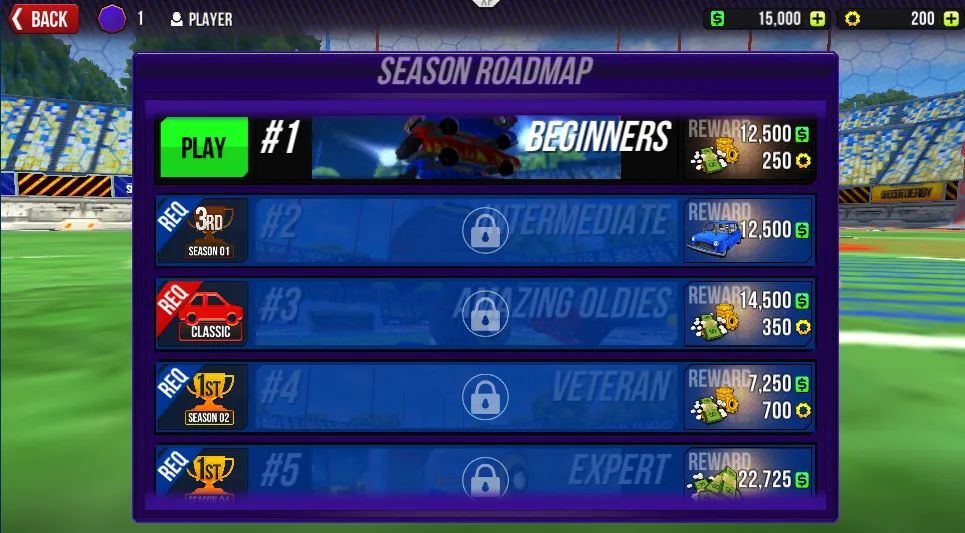
Arena-based timed matches

Boost and impact-driven car movement

Offense-defense transitions in real time

Controls

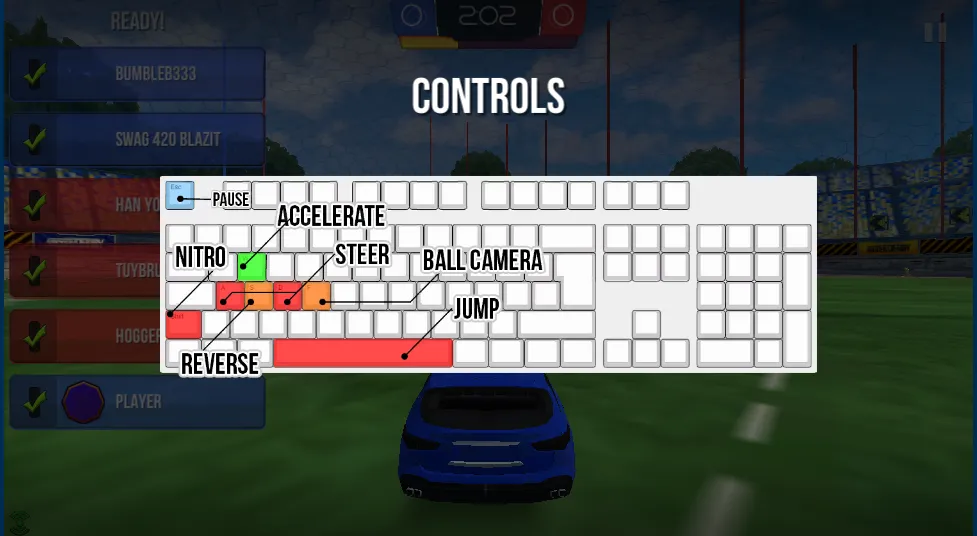
PC: Use WASD or Arrow keys to drive, Space for handbrake, Shift for boost.
Mobile: Use on-screen steering, accelerate, brake, and boost buttons.

FAQ

Q: How do I improve quickly in this game?

A: Practice the hardest segment separately, then reconnect segments into full runs once your segment clear rate is stable.

Q: Why do I keep failing after good starts?

A: Most players fail from over-correction after near misses. Use smaller recovery inputs and keep a fixed visual scan lane.

Q: Is mobile harder than desktop?

A: Usually yes for precision inputs, but mobile performance becomes stable when sessions are shorter and rhythm-based inputs are used.

Q: Should I chase score lines every run?

A: Only after consistency is established. Reliability first, optimization second.

Update Log

  • 2026-06-22 - Expanded page to original playtest structure with segmented route guidance and FAQ.
  • 2026-06-18 - Refined controls and obstacle timing notes for improved readability.
  • 2026-06-10 - Verified core gameplay flow and refreshed metadata consistency.
Published: 2026-05-14
Updated: 2026-05-14
Soccer
Car
Sports
Arena
Physics

Player Comments

(6)
AM

amyroberts

Jun 14, 2026

ok so took me a few runs to get timing down. harder than it looks at first. would recommend

AC

acollins

Jun 8, 2026

after like 20 deaths: shared w/ friend, we compared attempt counts like idiots gg

BE

ben.phillips

May 25, 2026

quick review - ran fine at school on chromebook. no install needed minus one star for no rebind tho

JO

jordansmith

Apr 16, 2026

ok so pc click > spacebar for me but ymmv worth a try

DE

derek_z

Jan 30, 2026

tried this on my phone yesterday. first bit is easy bait tehn it actually tests you still playing

CA

CarlosX

Jan 15, 2026

played this on lunch break. ran fine at school on chromebook. no install needed 4/5

Leave a comment about Rocket Soccer Derby

Comments save in this browser only.