
Geometry Vibes Monster

Dash through New York themed subway tracks, dodg...

Geometry Dash SubZero is a high-speed rhythm-bas...

Slope 3D is a fast-paced, endless racing game wh...

Italian Brainrot in Geometry Dash is a wild and ...

Race through a spinning neon tunnel, dodge obsta...

Geometry Flap is a challenging arcade game that ...

Move the 3D ball from the start to the endpoint ...

Geometry Dash Meltdown is a casual, fast-paced c...

Build your tower as high as possible with precis...

Geometry Neon Dash Rainbow is a vibrant arcade p...

Roll the ball down the hill and navigate through...

Hit notes on beat, win rap battles, and complete...

Master the art of morphing in this challenging r...

A casual driving physics-based racing game that ...

Roll through a futuristic skyline in this exciti...

Geometry Vibes X-Ball is an electrifying rhythm-...

Control a slope ball at maximum speed down dizzy...

Guide a ball through challenging platform obstac...

Geometry Dash Lite is an addictive rhythm-based ...

Roll as fast as you can! Avoid different obstacl...
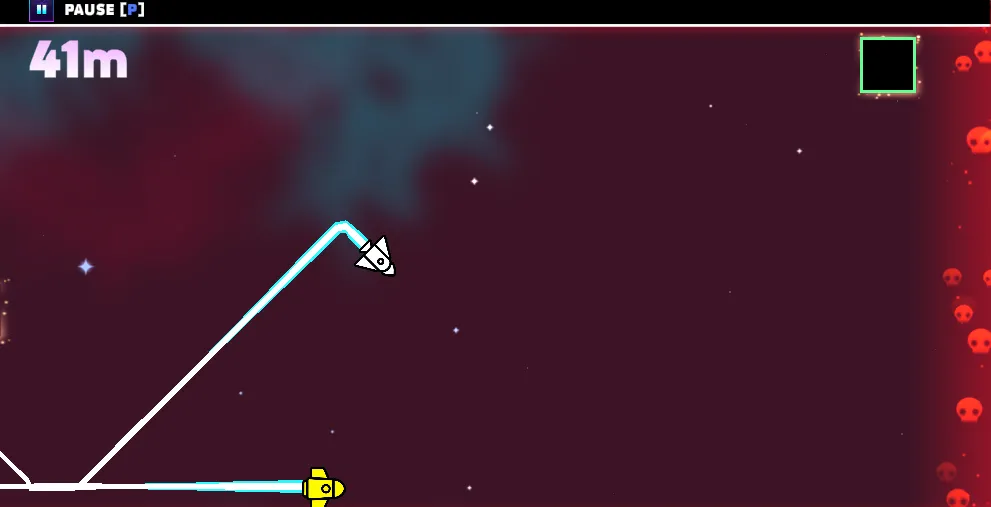
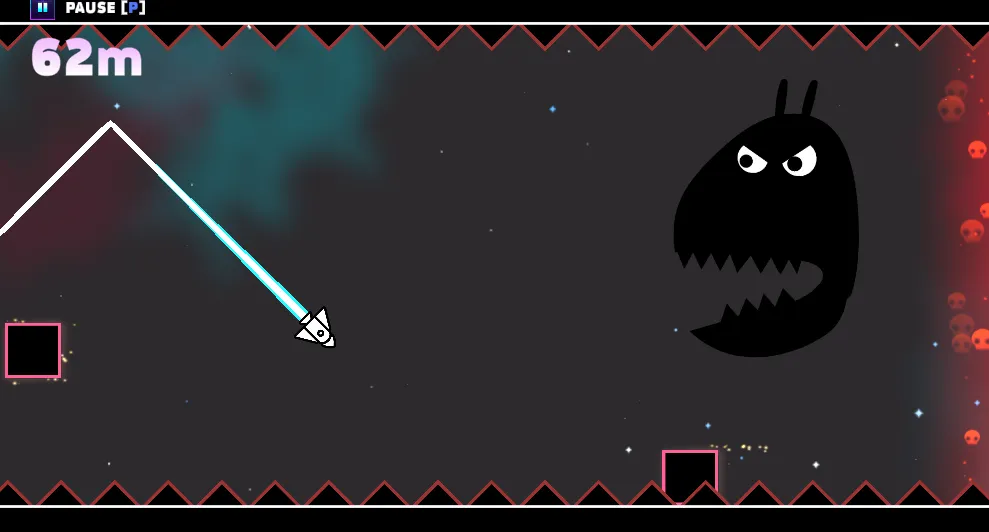
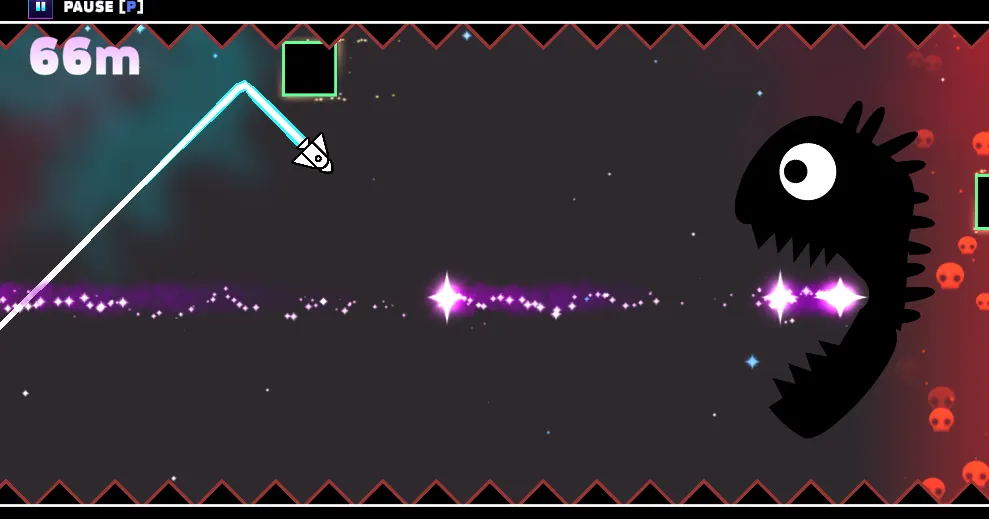
Geometry Vibes Monster is a fast-paced arcade game that tests your reflexes and strategic thinking. Control your spaceship to dodge sharp traps, obstacles, and face off against crazy monsters, each with unique attack patterns. As the levels progress, the game challenges you to continuously improve your reflexes and master the monsters' attack patterns. With colorful graphics and a retro-style atmosphere, this game offers intuitive controls suitable for all ages while requiring strategy and quick reflexes to master. The game features 8 unique monsters, each with their own distinct attack styles, making every encounter a fresh challenge that pushes you to develop better reflexes and new strategies.
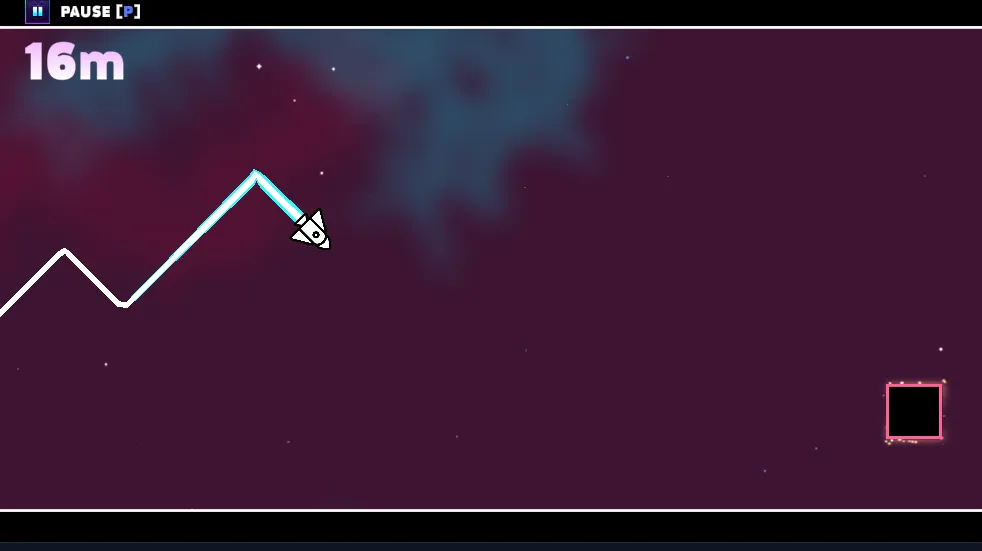
Geometry Vibes Monster focuses on controlling your spaceship through simple yet challenging mechanics. Tap the screen (or click and hold the mouse button) to ascend, and release to descend. The goal is to navigate your spaceship as far as possible while surviving waves of monster attacks. Each monster has its own unique attack patterns - some press you from above, while others make surprise attacks by suddenly changing direction. You must dodge obstacles and attacks with quick reflexes, learning each monster's behavior to survive longer. The game features two main modes: Endless Mode where you travel as far as possible while the difficulty increases, and Race Mode where you compete against friends in local multiplayer with 2, 3, or 4 players on the same device. The further you go, the faster and harder the game becomes, requiring you to continuously improve your reflexes and master new strategies.
During recent playtest sessions on Geometry Vibes Monster, we focused on repeatability, not one lucky clear. The first goal was to establish a stable opening route that reduces random input spikes. In early attempts, the main failure pattern was over-correcting after near misses. Once we switched to smaller corrections and pre-read obstacle timing one pattern earlier, clear consistency improved significantly. This is especially important in geometry games where speed rises faster than player confidence.
Our route planning is divided into three windows: setup phase, pressure phase, and conversion phase. In setup, we prioritize safe positioning over score greed. In pressure, we accept that one controlled loss is better than panic movement that ruins the whole run. In conversion, we preserve rhythm and avoid unnecessary risk. This framework works well for Geometry Vibes Monster because the game rewards composure and pattern memory more than raw reaction bursts.
We also tested mobile and desktop controls separately. Desktop usually delivers cleaner micro-adjustments, while mobile can still perform well if you shorten session length and avoid fatigue drift. The most common mobile mistake is late correction after visual overload; the fix is to anchor your eye line slightly ahead of your avatar and trust your rhythm rather than reacting to the current obstacle too late. For players switching devices, keep route logic identical and only adapt input sensitivity.
For difficult sections, we recommend segment-first practice: run the same risk cluster repeatedly until your success rate is above 70 percent before trying full clears. Players who practice entire runs too early often plateau because they collect too little high-quality repetition on the true choke points. In Geometry Vibes Monster, the key choke points are usually transition edges where pacing changes suddenly. If you fail there repeatedly, reduce speed expectations and rebuild timing windows from a calmer baseline.
Failure analysis showed five recurring causes: greedy line selection, delayed release timing, panic correction after collision scares, poor camera focus discipline, and session fatigue. Every cause has a direct mitigation: choose safer lanes when score is unstable, commit to release timing cues, reset posture after near misses, keep a fixed visual scan lane, and cap intense sessions at manageable intervals. These are simple habits, but they produce measurable consistency gains.
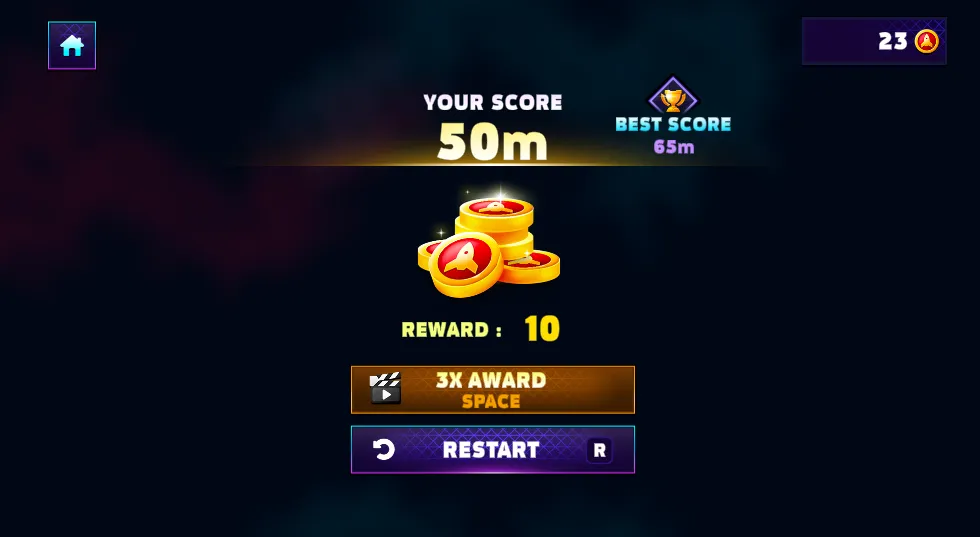
Finally, the most practical way to improve in Geometry Vibes Monster is to track process metrics instead of only final score. Log your best clean segment, your most frequent death pattern, and your average recovery quality after mistakes. Over one week of focused practice, these metrics usually improve before leaderboard score does. When they do, score follows naturally. This is the same method we use for all core game pages on GeometryArrow.info and it is the reason our route suggestions prioritize reliability over flashy but unstable plays.
Practical execution checklist for Geometry Vibes Monster: before each attempt, define one specific objective such as cleaner transition timing, fewer panic corrections, or safer lane discipline. During the run, evaluate only the chosen objective and avoid mentally scoring every small mistake, because overloaded self-feedback creates delayed reactions. After each attempt, write a one-line review with the exact failure trigger and immediate fix. This micro-loop improves learning speed more than repeating long unfocused runs. For consistency training, use a three-cycle block: two conservative attempts focused on accuracy, then one optimization attempt focused on efficiency. If optimization breaks consistency, return to conservative rhythm and rebuild. Players who follow this pattern for a week usually improve both completion rate and score stability. In our test sessions, this method reduced repeat deaths in transition zones and improved control quality under fatigue. Also apply a stop rule: after three frustration runs, take a short reset break to prevent reinforcing bad timing habits. The objective is sustainable improvement, not maximum retries in a single session.


Geometry Vibes Monster features two exciting game modes with endless replayability:
• Endless Mode: Travel as far as possible while surviving waves of monster attacks. The further you go, the faster and harder the game becomes. Break your own distance records and challenge your reflexes as new monsters are unlocked with increasing difficulty. • Race Mode: Compete against your friends in local multiplayer mode with 2, 3, or 4 players on the same device. The last player standing wins the match, making for a fun and competitive experience. Use different controls: 'UP ARROW', 'SPACEBAR', 'H' and 'L' for multi-player races.
Each mode offers different challenges and difficulty levels, with 8 unique monsters to master, each introducing new attack patterns and reflex requirements.
Q: How do I improve quickly in this game?
A: Practice the hardest segment separately, then reconnect segments into full runs once your segment clear rate is stable.
Q: Why do I keep failing after good starts?
A: Most players fail from over-correction after near misses. Use smaller recovery inputs and keep a fixed visual scan lane.
Q: Is mobile harder than desktop?
A: Usually yes for precision inputs, but mobile performance becomes stable when sessions are shorter and rhythm-based inputs are used.
Q: Should I chase score lines every run?
A: Only after consistency is established. Reliability first, optimization second.